2026 RMS-AAPG Annual Meeting
Field Trips
2026 RMS-AAPG Field Trips
Go beyond the conversation of Rocky Mountain Earth Science at the RMS-AAPG 2026 Convention and actively participate in one of the great field trips.
The 2026 field trip program is now set. We invite you to join one ore more of the RMS-AAPG 2026 field trips to field sites in and around Butte. Learn from experts in their field about rare earth elements in the world class petroleum source rock of the Phosphoria Formation; take another look at complex structures in Dry Hollow and their control on porosity and permeability; take a peak behind the scenes of a mining operation at the active Continental Pit; and learn more about the world famous Berkley Pit.
Pre-Conference Field Trips (Saturday, October 24th, 2026):
Field Trip 1: “Critical Minerals from Sea Bug Corpses”
Field Trip Leaders: Prof. Adrian Van Rythoven (MBMG) and Prof. Marc Hendrix (University of Montana)
Field Trip Fee: $50 for professionals; $20 for students
Field Trip departs from and returns to Montana Tech campus. To make this trip possible, we're asking for volunteer drivers. If you're able to drive, please let us know, as your help is greatly appreciated! We also ask that all attendees be willing to carpool so we can keep the number of vehicles to a minimum. Lunch will be provided, so there's no need to pack one.
Special Publication 124, Montana Mining and Mineral Symposium 2024
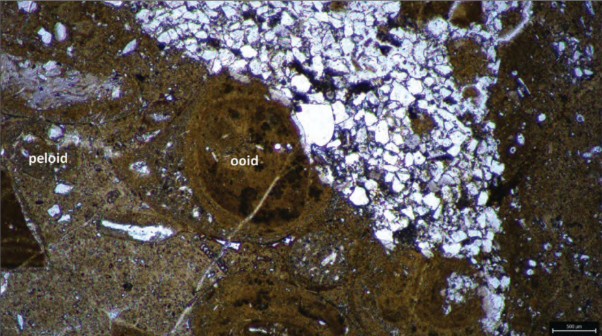
Field Trip Highlights: This field trip shows correlations between trace element concentrations and depositional environments. The Permian age Phosphoria Formation, found in Montana, Idaho, Utah and Wyoming, was deposited during marine transgressive-recessive cycles in a foreland basin during the assembly of the Pangean continent. The Retort and Meade Park members contain high phosphate and hydrocarbon content of the formation. At the depositional margins of the Retort depocenter, very well-sorted ore grade peloidal phosphorite is present. Elevated levels of cadmium, chromium, copper, fluorine, molybdenum, nickel, rare earth elements (REE), selenium, uranium, vanadium, and zinc were also found in peloidal phosphorite. The exceptionally high concentrations of metals have been interpreted to reflect fundamental transitions from anoxic to oxic marine conditions.
Phosphoria Formation was historically mined in Montana for phosphorous until the 1990s. In the 1950s and 60s, the formation was also evaluated for vanadium and uranium. With recent economic and political pressures for domestic rare earth elements (REE), the Phosphoria has received another look as a potential resource. REE mineralization in the Phosphoria has been noted historically, but with recent economic and political pressures for domestic REE production, a deeper understanding of how the depositional environment impacts the location and quantities of REE mineralization has become a priority.
This field trip consists of a trip to the former Edgar Mine, a source of peloidal phosphorite, located south of Drummond. At the mine site, samples from the Retort member obtained from other abandoned or reclaimed mines from southwestern Montana will be provided for viewing, along with their assay results and description of their lithologies. This information is to demonstrate that lithologies and assay results can be used as a method in determining whether economic REE production is realistic. The samples used in this trip are discussed in the Montana Bureau of Mines and Geology Special Publication 124.
Field Trip 2: “Fault, Fold, and Cleavage Duplexes of Sandy Hollow”
Field Trip Leader: Stuart Parker (MBMG), Steven E Boyer*
*Co-author of field guide; not in attendance
Field Trip Fee: $50 for professionals; $20 for students
Field Trip departs from and returns to Montana Tech campus. To make this trip possible, we're asking for volunteer drivers. If you're able to drive, please let us know, as your help is greatly appreciated! We also ask that all attendees be willing to carpool so we can keep the number of vehicles to a minimum. Lunch will be provided, so there's no need to pack one.
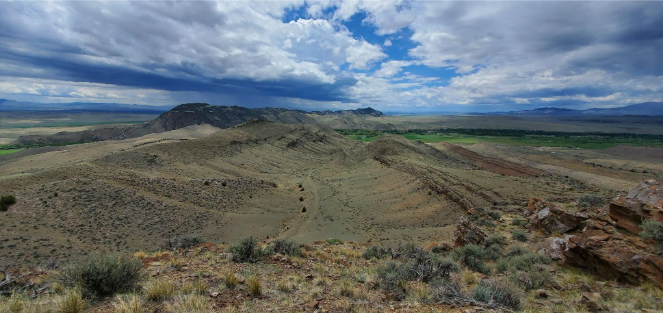
Field Trip Highlights: The incredible exposures of folded and faulted rocks within Sandy Hollow, located about 50 miles south of Butte, have long been used by structural geologists as analogs for the structures that characterize thin-skinned fold-thrust belts around the world. Understanding the geometry and deformation mechanisms associated with folds and faults is crucial when assessing hydrocarbon potential in these tectonic settings. The series of fault-propagation folds and associated thrust faults observed around Sandy Hollow are structural analogs to what occurs at depth within many oil and gas fields in foreland settings. On this field trip we will focus on the outcrop to meso-scale duplexes that commonly occur within these larger fault-propagation folds and thrust faults, in an attempt to gain a better geometric understanding of smaller-scale, more distributed deformation zones that may not be directly visible on seismic surveys. The field trip will highlight the wide array of deformation mechanisms that operate within duplexes, which may include faulting, folding, or pressure solution (cleavage). Field examples of fault, fold, and cleavage duplexes will be used to demonstrate how porosity and permeability may be either created or destroyed during progressive deformation. Understanding how strain evolved within these common but small-scale structures allows for detailed inferences to be made regarding porosity and permeability within larger potential hydrocarbon targets, specifically in anticlines above fault-propagation folds like those on display in Sandy Hollow.
Post-Conference Field Trips (Tuesday, October 27th, 2026):
Continental Pit Mine and Mill Tour
The Continental Pit field trip, scheduled for Tuesday, October 27 from 8:30 – 11:30 am, visits Montana Resources current mining operations. The mine area consists of a thick leached cap and overburden, 160 to 200 feet, draped over a massive copper-molybdenum orebody bounded on the west by the Continental Fault and on the east by the Klepper Fault. Continental Primary Zone copper occurs as chalcopyrite in interlacing veinlet swarms and as disseminations in the Butte Quartz Monzonite while Continental Primary Zone molybdenum occurs in younger subparallel veinlet swarms and slicks that offset the early copper veinlets. Participants will be able to examine oxidized, supergene, and hypogene ores in situ.
The tour covers the mining process from drilling and assaying cores through extracting the metal sulfides in flotation cells. The extracted metal sulfide concentrates are then transported to offsite roasting facilities or smelters for final processing.
Notes:
- In case of inclement weather, this tour will be cancelled.
- Steel toed shoes/boots and hard hats are required for touring the Continental Pit mine.
- It is possible that Montana Resources has hard hats to borrow for the tour.
- Lunch will be provided
Water Management Tour
After visiting Montana Resources permitted copper and molybdenum mine and concentrator in the morning, we will turn to the Superfund cleanup of legacy mining from a perch overlooking the Berkeley Pit, the Continental Pit, the concentrator and the 700+ foot high Yankee Doodle Tailings impoundment after lunch, from 1 – 3 pm.
The origins of the ore and subsequent contamination for the entire Superfund complex, including the Anaconda Smelter and Clark Fork/Mill Town Sediments Sites, are the 10,000 miles of underground workings and the Berkeley Pit with its infamous lake. Underground mining was going full bore by the 1880s but was largely abandoned as the rich copper veins played out and open pit mining proved more economical to extract lower grade ore in the later 1950s. In 1982, Atlantic Richfield, the mine owner, turned off the pumps that kept groundwater out of the Berkeley Pit and underground workings. By 1987, when EPA established the Butte Mine Flooding Operable Unit, the Berkeley Pit had a small but rapidly rising lake that was fed by groundwater flowing through the surrounding underground mine workings. The EPA determined that cleaning up contamination in the rising water would be technically impracticable, but that the contamination could be managed by keeping water levels below an elevation that would contain it within the mining area, a “protective water level” at 5410 feet above sea level. Water levels are currently being maintained well below that mark by pumping and treating and then releasing the treated water into Silver Bow Creek. A working group of local, state and federal personnel, plus local citizens, has created an informative website called Pitwatch (https://pitwatch.org/learn/water-treatment/).
Questions? Contact 2026 RMS-AAPG field trip co-chairs Mary Bitney and Jake Thacker (rmsaapgmeeting@gmail.com)